Quick answer
When is turbo replacement worth discussing?
This service is intended to confirm turbocharger failure and correct oil-supply, intake, boost or engine causes that could damage a replacement. A symptom is a reason to inspect the vehicle; it is not automatic proof that a major component should be replaced.
Assessment evidence for turbo replacement
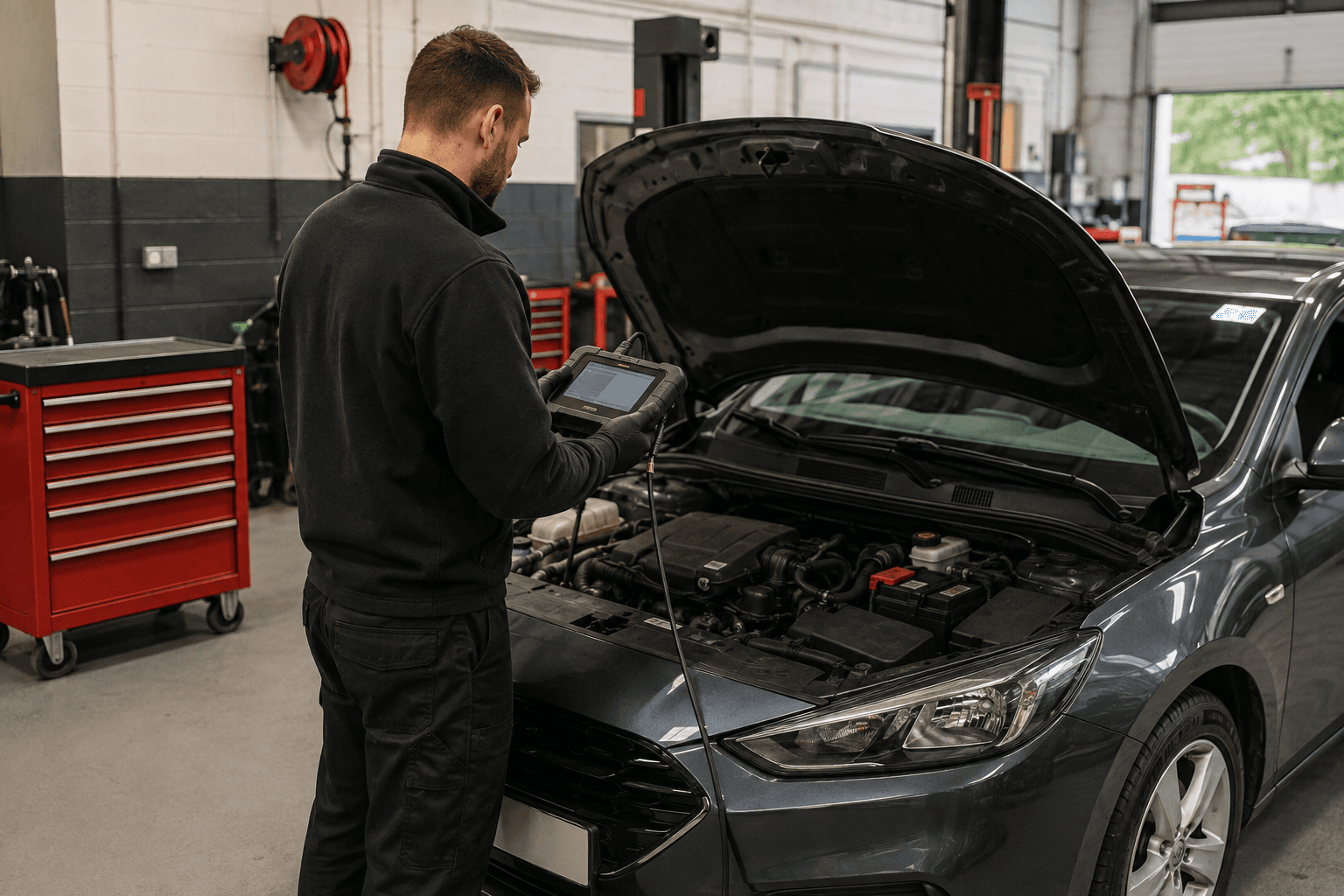
The first checks may include boost data and actuator operation, shaft, noise and oil-leak evidence, oil feed and drain condition, intake, intercooler and exhaust restrictions. The exact sequence follows the customer's complaint and vehicle rather than a universal parts-replacement checklist.
Underboost, smoke or whistle can result from split hoses, sensors, exhaust restrictions or engine wear; replacing the turbo without finding the cause risks repeat failure. The workshop should be able to explain which observation supports the proposed next step and which uncertainty remains.
Repair and replacement options
The possible routes include repairing a hose, sensor or actuator fault, reconditioning where suitable, fitting a compatible replacement, addressing engine wear or oil contamination first. Suitability depends on the inspection, vehicle specification, access and the condition of surrounding components.
- Confirm the turbo is the root cause
- Check oil supply, intake and boost pipework
- Fit the agreed unit and verify boost operation
What affects price and workshop time?
Important cost variables include turbo specification and actuator type, new or reconditioned supply, oil pipes, gaskets and fluids, intercooler cleaning, coding or calibration. A useful quotation states what is confirmed, which parts and materials are included and how further findings will be authorised.
Timing can change because of access and seized exhaust fasteners, oil-system cleaning, connected engine faults, unit availability. Ask whether the booking is for inspection, diagnosis or completed repair and whether the vehicle may need to remain at Arnold Lane.
What to provide before booking
Send describe smoke colour and power loss, record boost warnings, mention oil consumption, provide recent oil-service and turbo history. Include the exact conditions that trigger the concern and any relevant photographs or dashboard wording.
Safety: Stop if the engine runs uncontrollably, produces heavy smoke, loses oil rapidly or makes severe turbo noise.
Aftercare and service records
After the work, ask what was confirmed, what was completed, which checks were carried out and what remains advisory. Relevant aftercare includes follow oil and warm-up guidance, monitor boost and smoke, use the specified oil and service interval.
Priority areas for turbo replacement
These nearby pages add local booking and travel context while the technical service information remains on this parent page. All point to the single workshop at 129 Arnold Ln, Gedling, Nottingham NG4 4HF.