This guide is general information. Stop driving and seek appropriate assistance if the vehicle is unsafe, seriously overheating, losing braking or steering control, or showing another urgent warning.
Colour and behaviour both matter
A warning light is the vehicle's way of recording a condition that needs attention. Red warnings often indicate a more urgent safety, temperature, pressure or charging concern, while amber lights commonly request inspection soon. The handbook for your exact vehicle remains the best first reference.
A light that flashes, appears with loss of power, or is accompanied by overheating, unusual noise, smoke or poor braking should not be treated the same as a steady maintenance reminder.
Record the useful details
Before switching the ignition off, note the exact symbol or message and what the vehicle was doing when it appeared. This helps distinguish an intermittent fault from one that is present continuously.
- Whether the light is red, amber or another colour
- Whether it is steady or flashing
- Any loss of power, vibration, noise or smell
- Recent repairs, battery issues or fluid loss
A fault code is a starting point
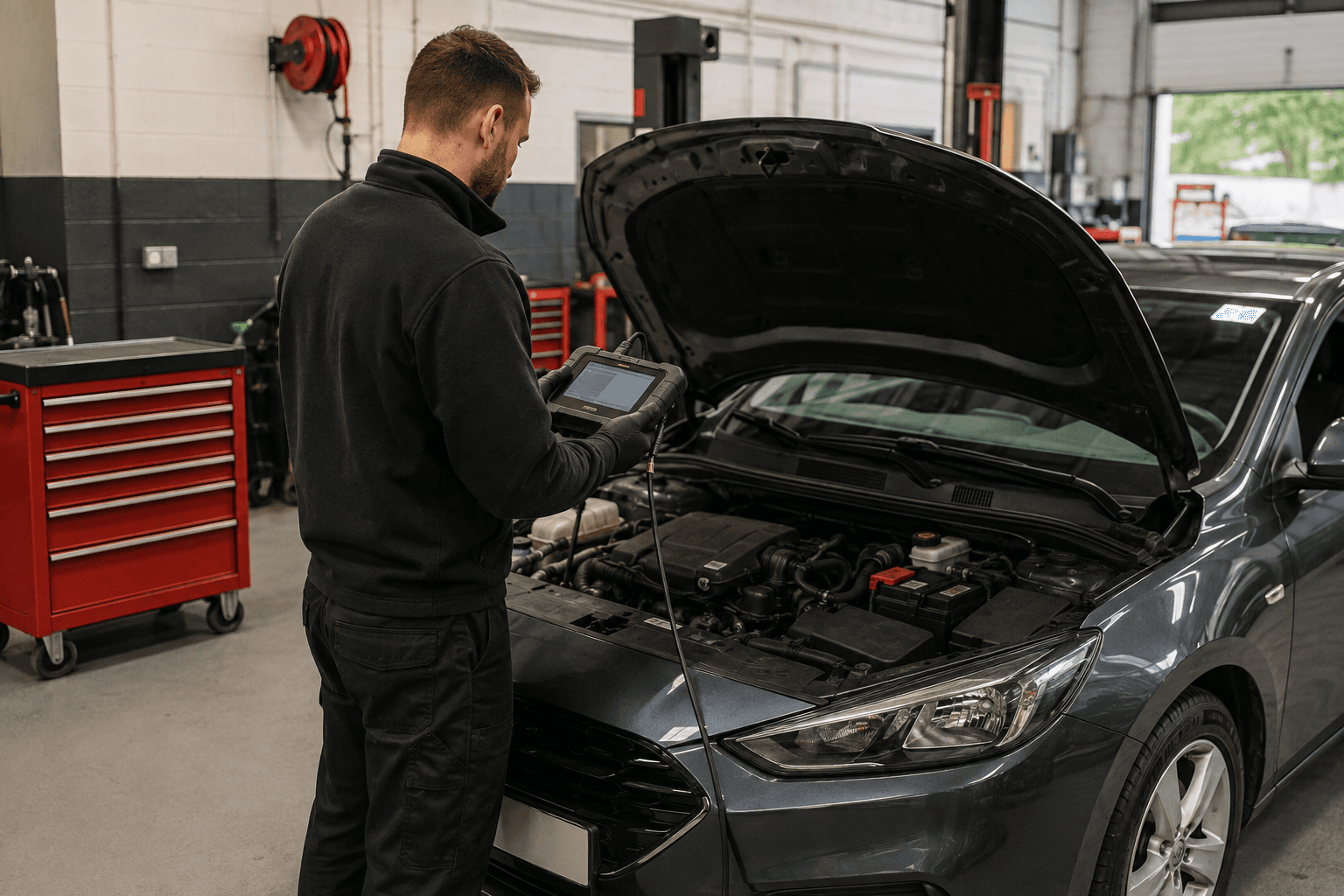
Diagnostic equipment can retrieve stored information, but a code does not always name the failed part. Wiring, sensors, mechanical conditions and connected systems can trigger similar records. Testing is what turns a code into a repair decision.
When to stop driving
Stop safely and seek appropriate assistance when the vehicle shows a serious oil-pressure, temperature, braking or steering warning, or when continuing could be unsafe. If in doubt, do not risk further damage or road safety for the sake of reaching the workshop.
Car Diagnostic Services in nearby areas
These local pages connect the guide to booking and travel information for the single Gedling workshop.
Related garage service
Car Diagnostic Services
Read the service page or send your vehicle details to Arnold Lane Service Centre.