Quick answer
When is fuel system repair worth discussing?
This service is intended to identify delivery, pressure, injector, leakage or control faults affecting starting, performance, emissions or fuel containment. A symptom is a reason to inspect the vehicle; it is not automatic proof that a major component should be replaced.
Assessment evidence for fuel system repair
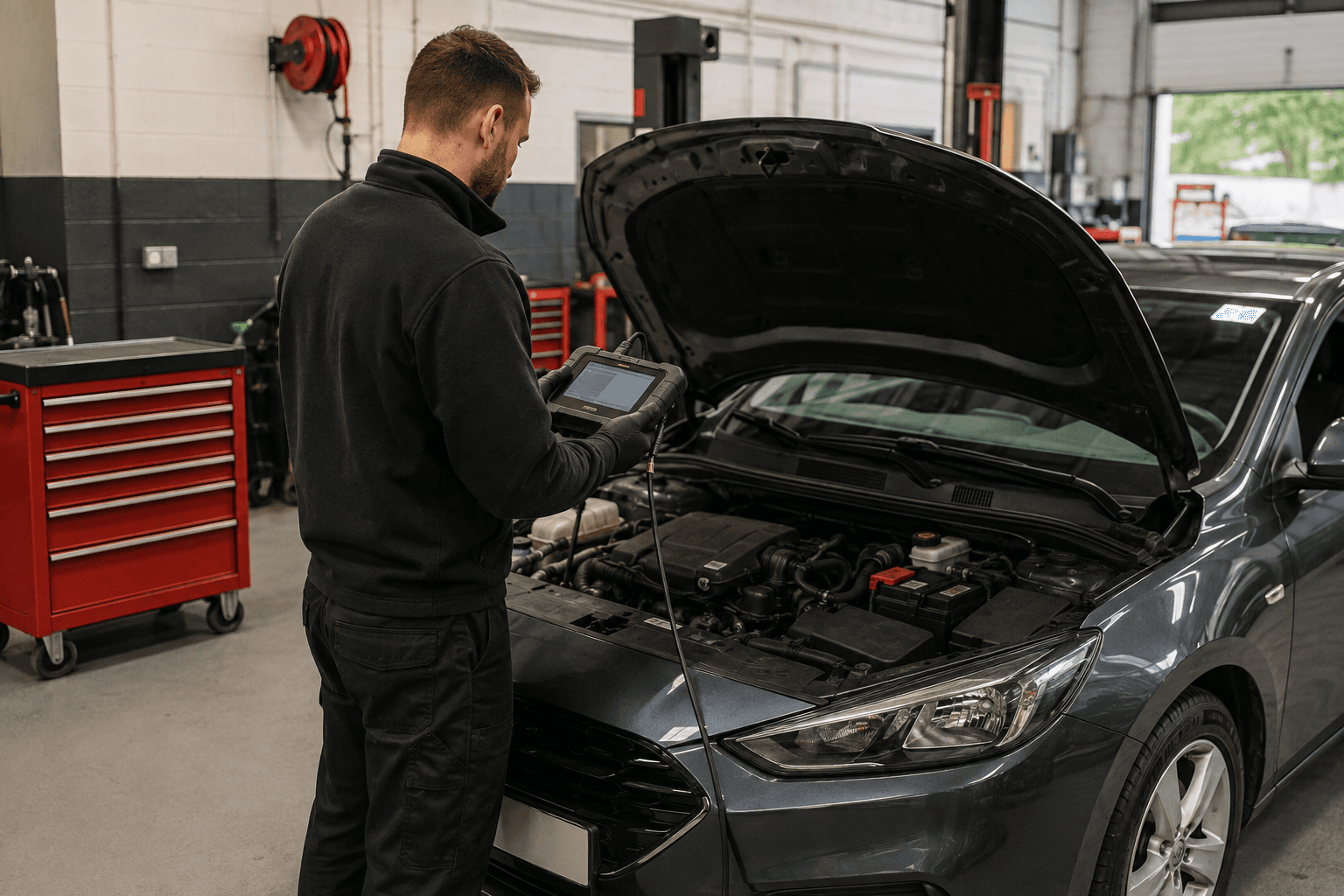
The first checks may include fault data and operating symptoms, fuel pressure and delivery evidence, leak and line inspection, injector, sensor and electrical checks. The exact sequence follows the customer's complaint and vehicle rather than a universal parts-replacement checklist.
Poor running can involve ignition, air metering, compression or electrical supply, so an injector or pump should not be assumed without evidence. The workshop should be able to explain which observation supports the proposed next step and which uncertainty remains.
Repair and replacement options
The possible routes include repairing a leak or connection, filter, pump or pressure-control work, injector testing or replacement, correcting an ignition, air or sensor fault instead. Suitability depends on the inspection, vehicle specification, access and the condition of surrounding components.
- Read diagnostic information and check pressure
- Inspect pumps, lines, filters and injectors
- Repair the identified fault and confirm operation
What affects price and workshop time?
Important cost variables include petrol or diesel system, high- or low-pressure component, injector coding and seals, tank or engine-bay access, contamination and connected damage. A useful quotation states what is confirmed, which parts and materials are included and how further findings will be authorised.
Timing can change because of intermittent symptom reproduction, pressure testing, component access, cleaning or contamination control. Ask whether the booking is for inspection, diagnosis or completed repair and whether the vehicle may need to remain at Arnold Lane.
What to provide before booking
Send describe starting and power changes, record warning messages, state whether the wrong fuel or contamination is possible, report fuel smell or visible leakage immediately. Include the exact conditions that trigger the concern and any relevant photographs or dashboard wording.
Safety: Do not drive with a fuel leak, strong fuel fumes, smoke or a suspected high-pressure fuel escape.
Aftercare and service records
After the work, ask what was confirmed, what was completed, which checks were carried out and what remains advisory. Relevant aftercare includes watch for leakage, monitor starting and warning behaviour, use the advised fuel and service schedule.
Priority areas for fuel system repair
These nearby pages add local booking and travel context while the technical service information remains on this parent page. All point to the single workshop at 129 Arnold Ln, Gedling, Nottingham NG4 4HF.