Quick answer
When is car exhaust repair worth discussing?
This service is intended to locate exhaust leaks, corrosion, failed joints, broken hangers or damaged emissions components before selecting repair or replacement. A symptom is a reason to inspect the vehicle; it is not automatic proof that a major component should be replaced.
Assessment evidence for car exhaust repair
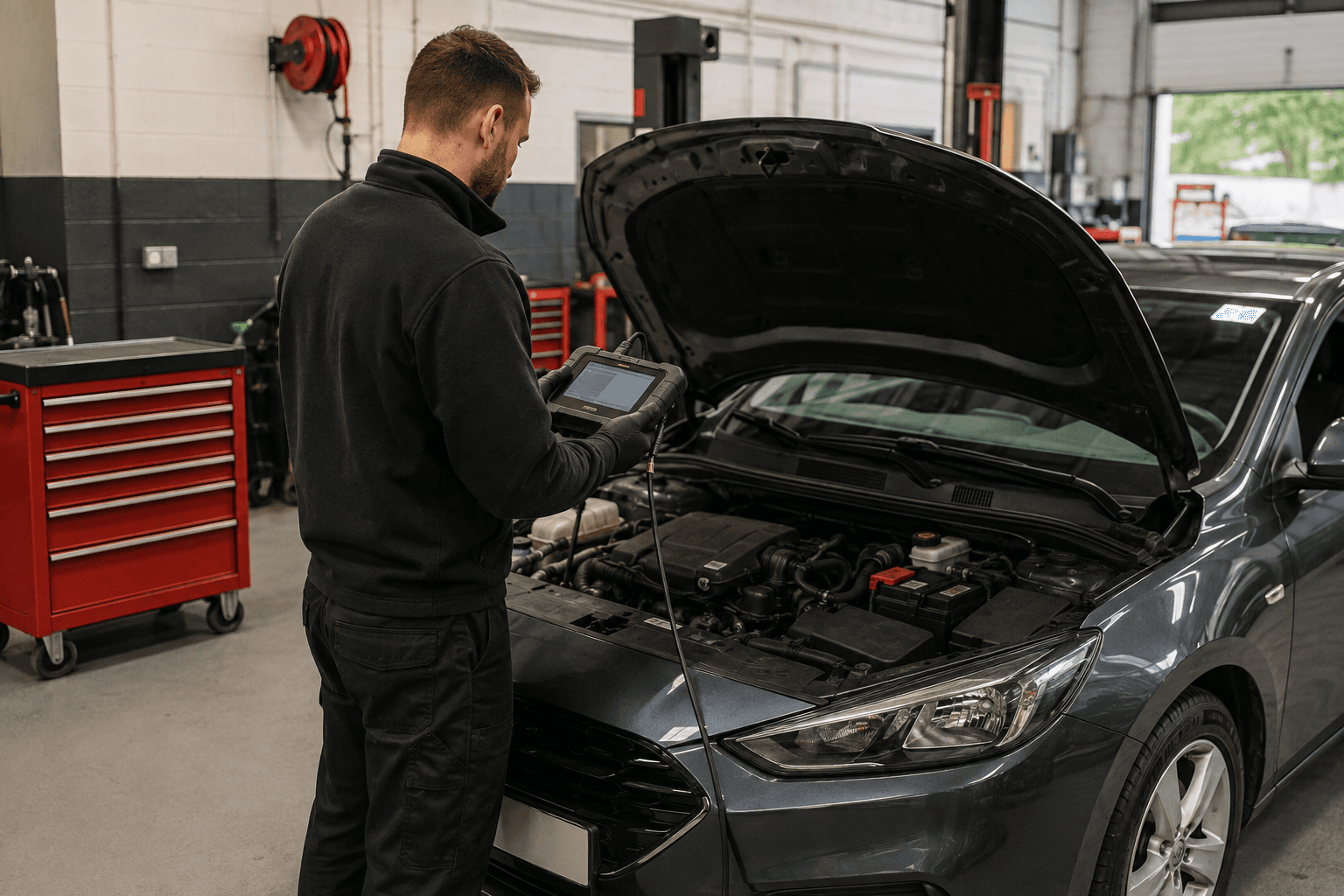
The first checks may include noise location and operating conditions, visible corrosion and joint leakage, hangers, shields and underbody clearance, warning data and emissions-related evidence. The exact sequence follows the customer's complaint and vehicle rather than a universal parts-replacement checklist.
A louder exhaust can come from several joints or sections, and an emissions warning can originate from engine control rather than the exhaust part itself. The workshop should be able to explain which observation supports the proposed next step and which uncertainty remains.
Repair and replacement options
The possible routes include repairing a suitable local section, replacing a corroded pipe or silencer, renewing joints, clamps or hangers, diagnosing catalyst, sensor or engine-management causes. Suitability depends on the inspection, vehicle specification, access and the condition of surrounding components.
- Inspect the system from manifold to tailpipe
- Identify repairable and replacement sections
- Check joints, hangers and leaks
What affects price and workshop time?
Important cost variables include location and extent of corrosion, single section or complete assembly, sensor and catalyst specification, seized joints and fasteners, custom or manufacturer-specific routing. A useful quotation states what is confirmed, which parts and materials are included and how further findings will be authorised.
Timing can change because of access to damaged joints, corrosion spreading beyond the visible hole, sensor removal, availability of the correct section. Ask whether the booking is for inspection, diagnosis or completed repair and whether the vehicle may need to remain at Arnold Lane.
What to provide before booking
Send describe rattling, blowing or fumes, state whether noise changes with engine speed, mention emissions warnings, report any impact beneath the vehicle. Include the exact conditions that trigger the concern and any relevant photographs or dashboard wording.
Safety: Do not ignore exhaust fumes entering the cabin, a hanging component, strong fuel smell or a hot part contacting the body.
Aftercare and service records
After the work, ask what was confirmed, what was completed, which checks were carried out and what remains advisory. Relevant aftercare includes listen for returning leaks, report fumes or rattles, respond to emissions warnings rather than repeatedly clearing them.
Priority areas for car exhaust repair
These nearby pages add local booking and travel context while the technical service information remains on this parent page. All point to the single workshop at 129 Arnold Ln, Gedling, Nottingham NG4 4HF.