Quick answer
When is auxiliary belt replacement worth discussing?
This service is intended to replace a worn accessory belt after checking the tensioner, pulleys and driven components that influence belt life. A symptom is a reason to inspect the vehicle; it is not automatic proof that a major component should be replaced.
Assessment evidence for auxiliary belt replacement
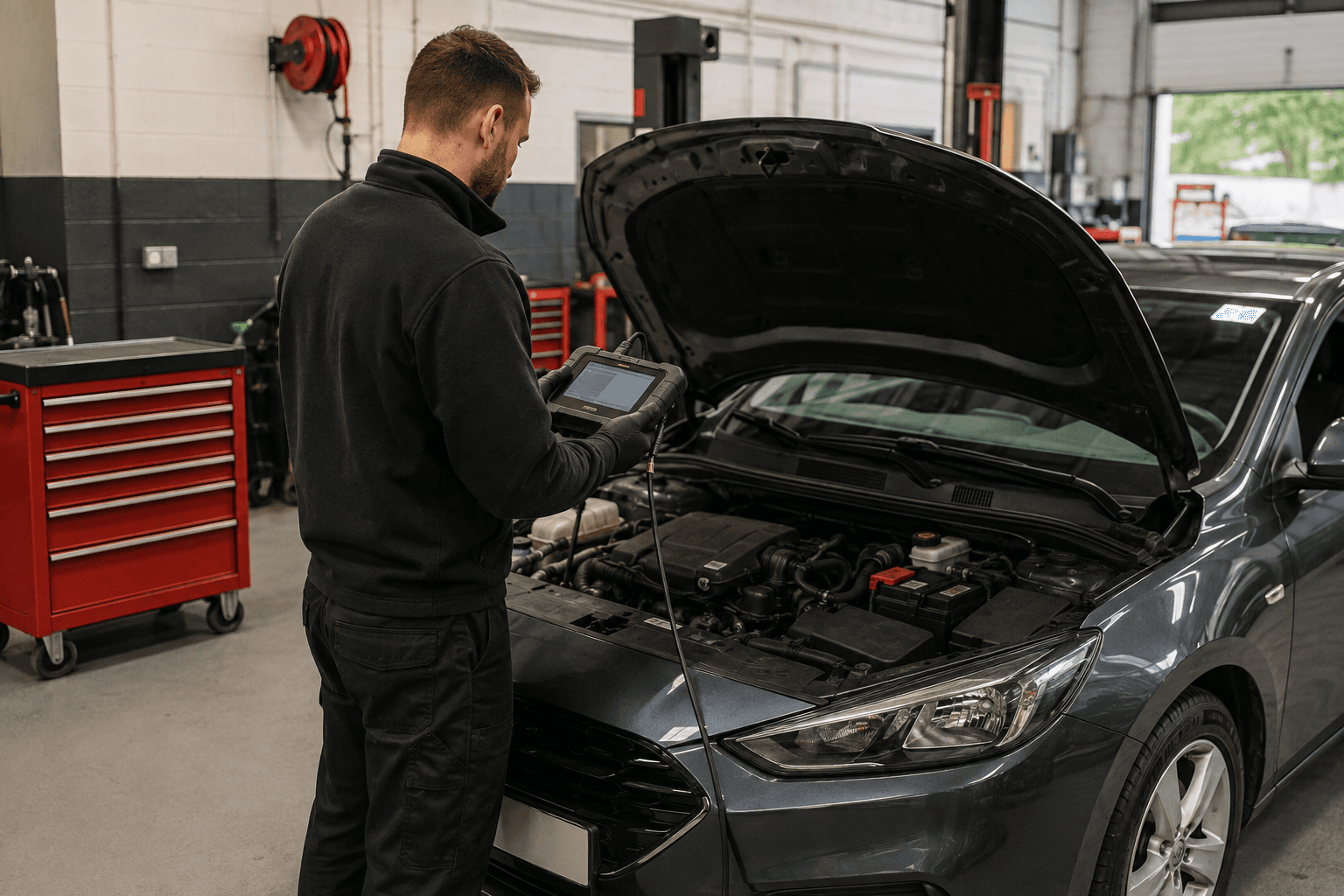
The first checks may include cracking, glazing and contamination, belt alignment and tension, pulley and tensioner movement, alternator and air-conditioning loads. The exact sequence follows the customer's complaint and vehicle rather than a universal parts-replacement checklist.
A new belt will not correct a misaligned pulley, weak tensioner, contamination or seized accessory. The workshop should be able to explain which observation supports the proposed next step and which uncertainty remains.
Repair and replacement options
The possible routes include belt replacement alone where appropriate, belt and tensioner or pulley work, repairing an oil or coolant leak first, diagnosing a driven component that is seizing. Suitability depends on the inspection, vehicle specification, access and the condition of surrounding components.
- Inspect the belt, tensioner and pulleys
- Fit the correct replacement belt
- Check alignment, tension and operation
What affects price and workshop time?
Important cost variables include belt routing and specification, tensioner or pulley condition, access, contamination repair, related alternator or compressor work. A useful quotation states what is confirmed, which parts and materials are included and how further findings will be authorised.
Timing can change because of component access, complex belt routing, seized tensioners, additional driven-component faults. Ask whether the booking is for inspection, diagnosis or completed repair and whether the vehicle may need to remain at Arnold Lane.
What to provide before booking
Send describe squeal and when it occurs, mention charging or cooling changes, provide recent belt history, report visible fraying without touching a running engine. Include the exact conditions that trigger the concern and any relevant photographs or dashboard wording.
Safety: Stop and seek advice if the belt breaks, steering or charging changes suddenly, or loose belt material is present near moving components.
Aftercare and service records
After the work, ask what was confirmed, what was completed, which checks were carried out and what remains advisory. Relevant aftercare includes listen for returning noise, monitor charging and cooling, address leaks that could contaminate the new belt.
Priority areas for auxiliary belt replacement
These nearby pages add local booking and travel context while the technical service information remains on this parent page. All point to the single workshop at 129 Arnold Ln, Gedling, Nottingham NG4 4HF.